
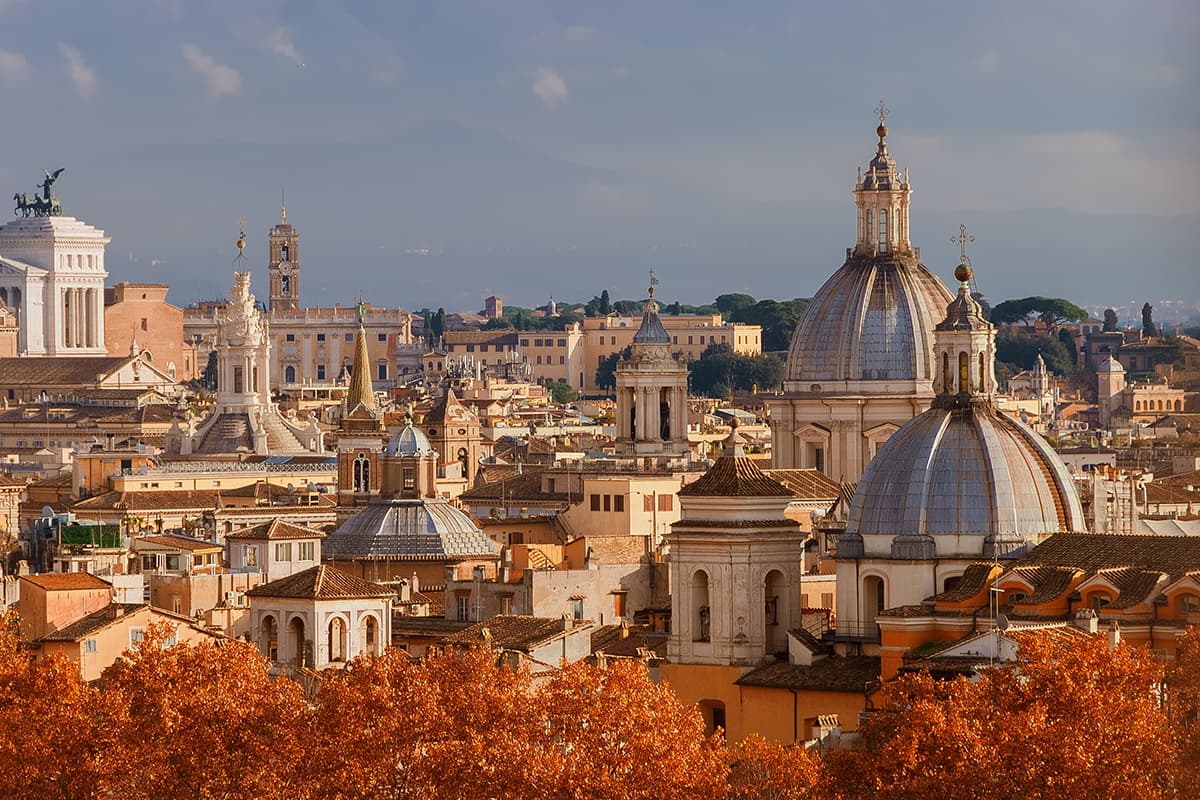
Rome in Autumn: Why September Is the Best Month to Visit
In August, Rome's average high sits around 88°F (31°C) and much of the city closes for the holidays. By mid-September the afternoon high has dropped into the upper 70s (about 25–26°C), shopkeepers are back from the beach, and you can sit in a piazza at 7 p.m. without looking for shade. This Rome autumn travel guide explains why September is the sweet spot, when October is the better choice, and what to plan around if you are arriving by cruise ship or plane.
Rome Weather in Autumn, Month by Month
September is warm and mostly dry; October is milder but wetter; November is the rainiest month of the year. Averages vary by source and by year, so treat these as a guide rather than a forecast.
| Month | Average high | Average low | What it feels like |
|---|---|---|---|
| September | 77–81°F (25–27°C) | around 60°F (15–16°C) | Summer days, cooler evenings, occasional heavy shower |
| October | around 70°F (21°C) | around 52°F (11°C) | Crisp and bright, with more rain in the second half |
| November | around 61°F (16°C) | around 45°F (7°C) | Jacket weather, frequent rain, quieter streets |
Daylight matters as much as temperature. On September 1 the sun sets around 7:45 p.m.; by September 30 it is closer to 6:50 p.m. In late October, after the clocks go back, the sun sets around 5:15 p.m., which shortens the useful sightseeing day noticeably.
Why September Is the Best Month to Visit Rome
The heat breaks, but summer doesn't end
You can still eat dinner outdoors, walk the Aventine at sunset in shirtsleeves and take a day at the beach at Santa Marinella or Santa Severa. The difference from July is that walking between sights no longer feels like an endurance event, which matters a great deal for older travelers and families with young children.
The city is working again
Many Roman restaurants, tailors and small shops close for part of August. In September they reopen, the neighborhood markets are full, and the city runs on its normal rhythm rather than on tourist traffic alone.
The cultural season starts
Autumn is when Rome's stages fill up again. The Romaeuropa Festival of contemporary dance, theater and music opens in early September and runs into November across venues from Teatro Argentina to the Auditorium Parco della Musica.
An Honest Word on Crowds
September is not low season. It is one of the busiest months of the year for Mediterranean cruises, and Civitavecchia regularly handles several ships on the same morning. The Vatican Museums, the Colosseum and the Trevi Fountain are crowded from late morning to mid-afternoon in any month. The practical fixes are simple: book timed entries ahead, see the big sights at opening time or after 4 p.m., and spend the middle of the day in a neighborhood like Monti or Testaccio.
If crowds are your main concern, late October and early November are quieter, at the price of more rain and shorter days.
When October Is the Better Choice
October suits travelers who care more about food, wine and events than about beach weather. Mushrooms and chestnuts appear on menus, the grape harvest is wrapping up in the hills, and two of the region's best-known autumn events fall in this month. Pack a light rain jacket and plan one indoor option for each day, such as the Borghese Gallery or the Capitoline Museums.
Autumn 2026 Dates Worth Planning Around
For current listings, Rome's official tourism portal, Turismo Roma, publishes an events calendar.
Day Trips That Shine in Autumn
Cooler weather makes the countryside around Rome far more pleasant than in midsummer. The Castelli Romani wine towns are at their liveliest around harvest time. To the north, the hill country of the Tuscia turns gold, and villages like Tolfa, 20 km from Civitavecchia, make an easy half day for cruise passengers who have already seen Rome. None of these places is well served by public transport on a tight schedule, which is where a car with a driver earns its cost.
Arriving by Cruise Ship or Plane in Autumn
Two things change in autumn for anyone heading into Rome from Civitavecchia or Fiumicino. First, a sudden downpour on disembarkation day turns the walk from the port gate to the train station, suitcases in tow, into a miserable 15 minutes. Second, weekday traffic returns in full once schools and offices reopen in September, so the drive into the city is less predictable than in August.
The regional train remains a fine option for light travelers with flexible plans, and our comparison of the four ways from Civitavecchia to Rome sets out the pros and cons honestly. For families, older travelers and anyone with a flight to catch, a pre-booked car takes weather and timetables out of the equation: book a Civitavecchia Port to Rome transfer or a Fiumicino Airport to Rome transfer, and your driver will be waiting with your name on a sign.
Book Your Autumn Transfer in Rome
Arriving in Rome this autumn? TK Limo Service meets you at Civitavecchia cruise terminal, Fiumicino or Ciampino with a name sign, tracks your ship or flight, and drives you straight to your hotel. Fixed price confirmed at booking, tolls included, Mercedes E-Class and S-Class for up to 4 passengers, V-Class for up to 7.
Frequently Asked Questions
Is September a good time to visit Rome?
September is one of the best months to visit Rome. Average highs fall to around 77–81°F (25–27°C), the city is fully open again after the August holidays, and the autumn cultural season begins. The trade-off is that it remains busy, especially at major sights, because it is peak cruise season.
What is the weather like in Rome in October?
October in Rome is mild, with average highs around 70°F (21°C) and cool evenings near 52°F (11°C). Rain becomes more frequent, particularly in the second half of the month, and days get shorter after the clocks change at the end of October. Pack layers and a light waterproof jacket.
Is Rome crowded in September?
Yes, reasonably so. September is a popular month for both land travelers and Mediterranean cruises, so the Vatican, the Colosseum and the Trevi Fountain are busy between late morning and mid-afternoon. Booking timed tickets in advance and visiting at opening time or late in the day makes a real difference.
Which is better for Rome, September or October?
Choose September for warmer weather, longer days and outdoor dining. Choose October for slightly smaller crowds, harvest-season food, the Marino grape festival and the Rome Film Fest, accepting more rain. Both are far more comfortable for sightseeing than July or August.
What events take place in Rome in autumn?
The main autumn events are the Romaeuropa Festival of contemporary performance, which runs from September into mid-November, and the Rome Film Fest in mid-to-late October. Just outside the city, the Sagra dell'Uva in Marino celebrates the grape harvest around the first Sunday of October.
How do I get from Civitavecchia port to Rome in autumn?
The options are the same year-round: regional train, shared shuttle, taxi or a pre-booked private transfer. In autumn, rain showers and heavier weekday traffic make the private transfer the most predictable choice, especially with luggage. The drive takes about 60–90 minutes depending on traffic.
What should I pack for Rome in autumn?
For September, pack summer clothes plus a light layer for the evenings. For October, add a sweater and a compact rain jacket. In every season, bring comfortable walking shoes, and cover shoulders and knees for church and Vatican visits, where the dress code is enforced at the entrance.